
"grade 5 beans"
5000 article(s) found
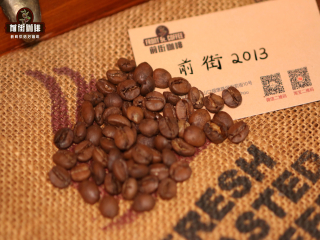
The Variety and Grade Standard of Yunnan small Coffee is Yunnan Coffee beans belong to Fine Coffee
Professional coffee knowledge exchange more coffee bean information Please follow the coffee workshop (Wechat official account cafe_style) Coffee planting industry in China started relatively late, it is common to use particle size + defect rate for rating. The particle size is based on the international standard mesh, as follows: the original sieve pore

Introduction to the treatment method of grinding degree for describing the taste and flavor of Ethiopian Sidamo Chiso coffee
Sidamo Shakiso production area a) Gr-1 is available both in washing and in the sun, on the condition that there are zero defects and Premium Cup. Whether it's washing or tanning, Gr-1 rates the boutique of the boutique or Cup ofExcellence coffee. B) the lowest level of sun-tanned Sheffield and Sidamo is Gr-4, unlike Gemma with Gr-5. But if sunny snow is the general exporter of Gr-4, Egypt will use

Coffee bean grade classification coffee acidity grade coffee bean grading standard
For more information on coffee beans, please follow the coffee workshop (official Wechat account cafe_style). Most people mistakenly think that coffee will taste sour if it is not fresh. In fact, coffee itself is an acidic drink. Whether coffee is sour or not depends on the variety and baking degree of beans. The longer the roasting time is, the higher the caramelization degree is, and the acidic substances are destroyed.

General knowledge of fine coffee beans grading of raw coffee beans
There are two ways to classify raw coffee beans, one is the filter number, and the other is the elevation. It is divided by the filter number, and the size is size in terms of the screen size. Round beans are generally smaller than flat beans, between 8-13 and 12-29. 8, 9, 10. 12, 13. 18. 29 = small, medium, ordinary. Quasi-big. Big, extra large. The bigger the size, the bigger the beans. Like SC-.

Coffee bean grade classification introduction of Brazilian coffee raw bean defect classification system
Professional coffee knowledge exchange more coffee bean information please follow the coffee workshop (Wechat official account cafe_style) front street-Brazilian coffee grading system introduction to Brazilian raw bean classification first coffee beans with parchment are shelled and removed by parchment machine. Workers then use vibration screening to grade coffee according to the density of raw beans. You know, density is an important measure of coffee quality.
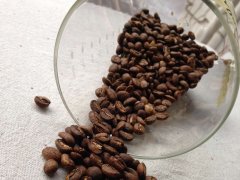
There are two ways to grade green coffee beans.
There are two ways to grade coffee beans, one is to filter the number of points, one is to elevation points. The size of the round beans is generally smaller than the flat beans, the round beans are between 8-13, and the flat beans are between 12-29. 8,9,10... 12,13... 18... 29= ,,......, Extra large. The bigger the number, the bigger the bean. SC-19, for example, is bean number 19.

Description of Flavor of Yejiaxuefei Coffee Manor introduction of Grinding scale in producing area
Yega Chuefei Coffee Manor Flavor description Taste Variety characteristics of production area Grinding scale introduction of Ethiopian washed Coffee Yega Chefe G1 G2 Cedamo (Yirgacheffe, Sidamo) the highest grades are Grade 2 and Grade 3 (G2, G3), and most of the sun-processed coffee in eastern Ethiopia are Grade 4 or Grade 5 (G4, G5). In many cases, level 4 coffee is marked as level 5 in order to
There are two methods for grading raw coffee beans in terms of sieve size, size
There are two ways to classify raw coffee beans, one is the filter number, and the other is the elevation. It is divided by the filter number, and the size is size in terms of the screen size. Round beans are generally smaller than flat beans, between 8-13 and 12-29. 8, 9, 10. 12, 13. 18. 29 = small, medium, ordinary. Quasi-big. Big, extra large. The bigger the size, the bigger the beans. Like SC-.

Ethiopian Hambera Coffee 5.0 Sidama Coffee Flavor Taste Characteristics Introduction
Professional coffee knowledge exchange More coffee bean information Please pay attention to coffee workshop (Weixin Official Accounts cafe_style) Several important Ethiopian coffee producing areas, such as Yejiashev and Sidamo, have received considerable attention in recent years. Guji is also a part of Oromia Asia, southwest Ethiopia, south of Addis Ababa, the capital.

Brief introduction and grading of Ethiopian Coffee beans
Most of the sun-processed coffee in eastern Ethiopia are grade 4 or grade 5 (G4, G5). In many cases, level 4 coffee is marked as level 5 in order to reduce taxes. At present, the grading is not uniform and a bit messy, because there are also first-and second-tier (Grand G2) Yirga Cheffe coffee processed by solarization, but the highest grade of Harald (Harar) is level four (
Fine coffee beans, small seeds, fresh coffee fruits.
1 scope this part defines the terms and definitions, fruit-picking requirements, grading, packaging, transportation and temporary storage of fresh fruits of small-grain coffee. This part is suitable for Pu'er small seed coffee. 2 normative citation documents the provisions of the following documents become the provisions of this part through the citation of this section. For all dated reference documents, all subsequent revision orders (excluding corrigendum

Classification and classification of coffee beans | meaning of the name of coffee
For more information on coffee beans, please follow the coffee workshop (Wechat official account cafe_style)-- how coffee is named-- G1, G2, G3, G4, AA, PB, SHB, SHG, EP, PLANTATION. Have you ever wondered what the difference is? Are you curious about what they are referring to? Today we are going to start talking about what we usually buy

Introduction to the Flavor description treatment method of Indonesian Coffee Raw Bean grading Standard
The standard for flavor description of raw coffee beans in Indonesia the size of the international practice is 9: 22, and the number used represents the diameter of the screen, with this number as the numerator and 64 as the denominator, in inches. For example, 14 refers to raw coffee beans that can be sifted through a 14-inch screen with a diameter of 64 inches, and 19 + refers to coffee that can be sifted with a diameter of more than 64 inches with a 19-inch screen.

Differences in Taste and Flavor characteristics of Coffee varieties in Yunnan Coffee Historical Story Coffee Bean grading
Follow the caf é (Wechat official account vdailycom) found that the beautiful cafe opened its own small shop Yunnan Coffee Bean which brand is good Yunnan match Coffee Yunnan match Coffee is made from Arabica Coffee beans, one of the most important coffee trees in the world, because of its unique geographical environment and climatic conditions, forming a fragrant but not strong, strong but not bitter, unique with a little fruit flavor
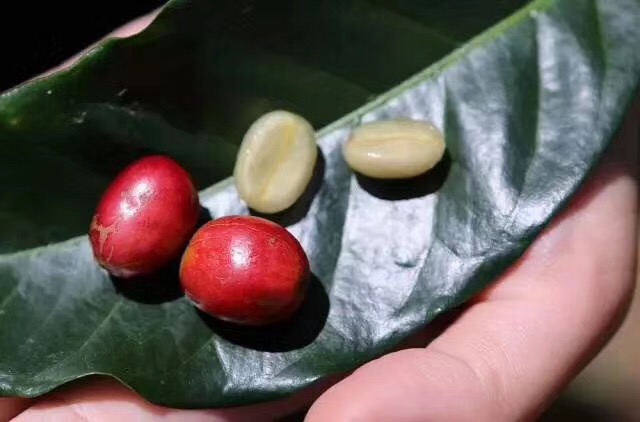
What is the amount of information contained in the name of coffee? Classification and classification of coffee
What is the amount of information contained in the name of coffee? Take chestnut as an example, coffee name: Costa Rica Tarrazu SHB EP Red Honey country + producing area + grading name + treatment translation: extremely hard beans in Tara Pearl, Costa Rica grading and classification of coffee treated with ep standard red honey in order to distinguish between good quality coffee beans and poor quality coffee beans

The grade of Ethiopian coffee
The highest grades of Ethiopian washed coffee Yega Chuefei G1 G2 Sidamo (Yirgacheffe, Sidamo) are Grade 2 and Grade 3 (G2, G3), while most of the sun-processed coffee in eastern Ethiopia are Grade 4 or Grade 5 (G4, G5). In many cases, level 4 coffee is marked as level 5 in order to reduce taxes. At present, the grading is not uniform and messy, because there is also sun processing.

The grade of Ethiopian coffee
Grade of Ethiopian coffee: Ethiopian washed coffee Yega Chuefei G1 G2 Sidamo (Yirgacheffe, Sidamo) has the highest grades 2 and 3 (G2, G3), while sun-processed coffee in eastern Ethiopia is mostly grade 4 or 5 (G4, G5). In many cases, level 4 coffee is marked as level 5 in order to reduce taxes. At present, the classification is not uniform and there are

Colombian coffee growing environment Colombian coffee variety grade
Colombian coffee grades are divided into several Colombian coffee-growing histories, dating back to the Spanish colonial era in the 16th century, and there are many theories about the history of coffee in Colombia: one: it is said to come from the island of the Caribbean and from El Salvador in Central America. Second: in 1808, a priest transferred coffee beans from the French Antilles to Venezuela.

Introduction to the grade of coffee beans in Ethiopia
Grade of Ethiopian coffee: Ethiopian washed coffee Yega Chuefei G1 G2 Sidamo (Yirgacheffe, Sidamo) has the highest grades 2 and 3 (G2, G3), while sun-processed coffee in eastern Ethiopia is mostly grade 4 or 5 (G4, G5). In many cases, level 4 coffee is marked as level 5 in order to reduce taxes. At present, the classification is not uniform and there are